BIOL 431/531: Ecological Modeling
Welcome to BIOL 431
About me
Hi! If you’re reading this, you’re probably a student in BIOL 431/531: Ecological Modeling. If not, it’s a bit weird that you ended up here, but welcome. I’m Eliza Grames, an Assistant Professor at Binghamton University. I am a conservation biologist and quantitative ecologist whose research primarily focuses on understanding the long-term status and trends of insect biodiversity, drivers of insect biodiversity loss, and consequences of declines in insect abundance and biomass for ecosystem function. As the course goes on, you will also learn that I really like cooking, the Lord of the Rings, and memes.
About this ‘book’
These notes are meant to supplement and accompany lectures and labs for BIOL 431/531: Ecological Modeling (Spring 2026) at Binghamton University. They are not meant to be a formal textbook by any means, but rather a pretty casual introduction to data, statistics, and modeling in R for ecologists. Because the course is cross-listed as a graduate and undergraduate course, I assume most people have minimal background in probability, statistics, or coding, so this should hopefully be a pretty gentle (and meme-heavy) introduction.
This ‘book’ was first drafted in Fall 2024, however, the course was previously taught as a 2-credit graduate seminar so I am editing and writing new sections as we go along. More sections will be added, and current sections may be updated depending on the pacing of the course (e.g., we may slow down if topics are particularly challenging, or may breeze through some if they do not warrant more time). This is the first semester the course has been taught as a full course with a lab section, and there will be some growing pains. I will do my best to tell you which section(s) we will cover each week and they will roughly parallel the syllabus, but we could end up skipping ahead, going backwards, or spending more time on some concepts than I anticipate.
If you’re reading along and find something to be particularly confusing, please do let me know! This is one of the two courses I regularly teach (the other being BIOL 477: Conservation Biology) and I will be updating this ‘book’ and all the other course materials every semester until it is finally in a shape I am mostly happy with (at which point I will still be tweaking things, but for the first few semesters, there will likely be major changes).
Why do I teach this course?
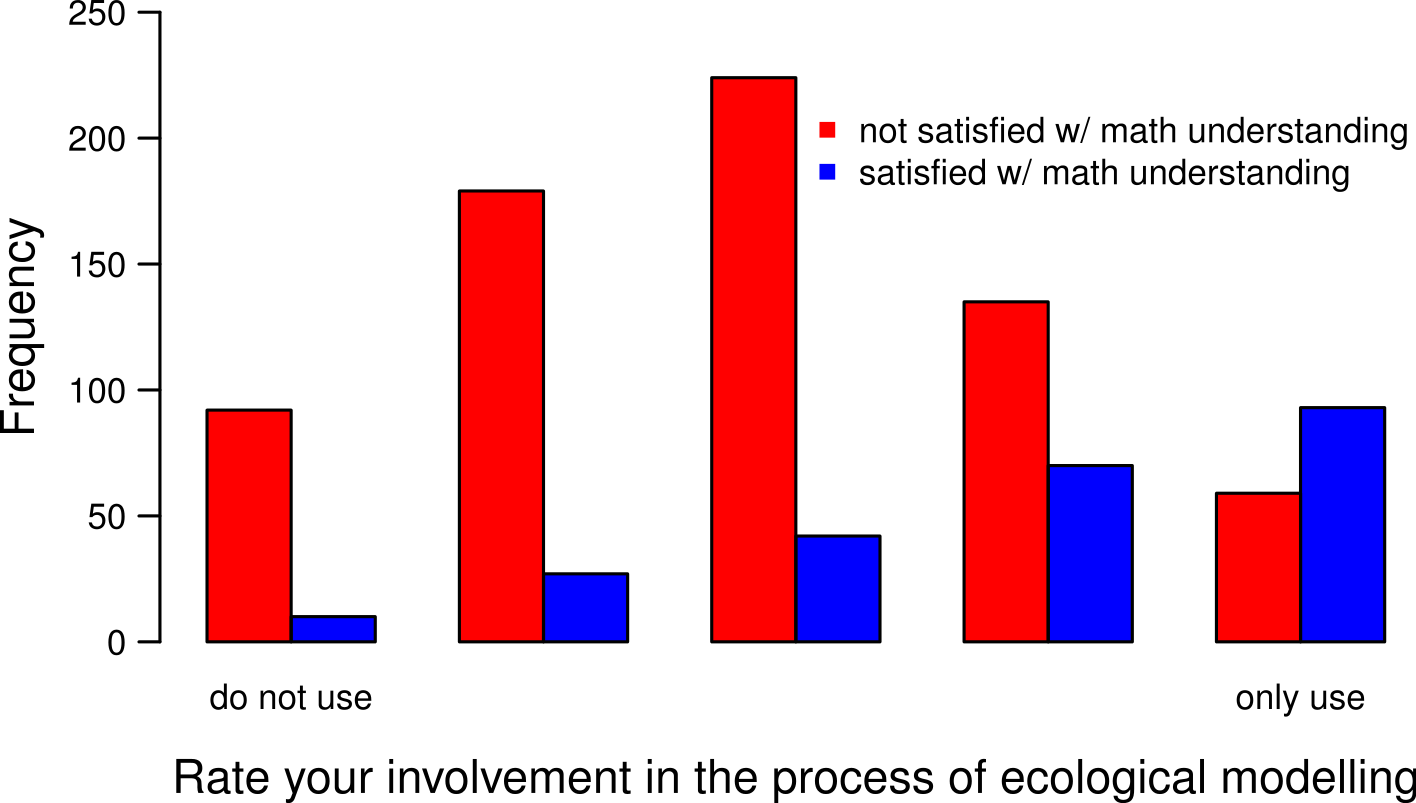
Ecology has always been heavily rooted in mathematics, but we often don’t include it in student training as much as we should. Just before I started graduate school (a decade ago, at this point!), a survey found that most early career ecologists lacked adequate quantitative training and 75% were not satisfied with their own understanding of ecological modeling. Ecology has always been heavily rooted in mathematics, and has become increasingly quantitative in recent decades, but graduate training has lagged behind that trend. I was lucky to have taken an Ecological Modeling course taught by two brilliant quantitative ecologists (and excellent human beings) - Morgan Tingley and Robi Bagchi - during my PhD at the University of Connecticut. This course is inspired by theirs, and similarly aims to train the next generation of quantitative ecologists.
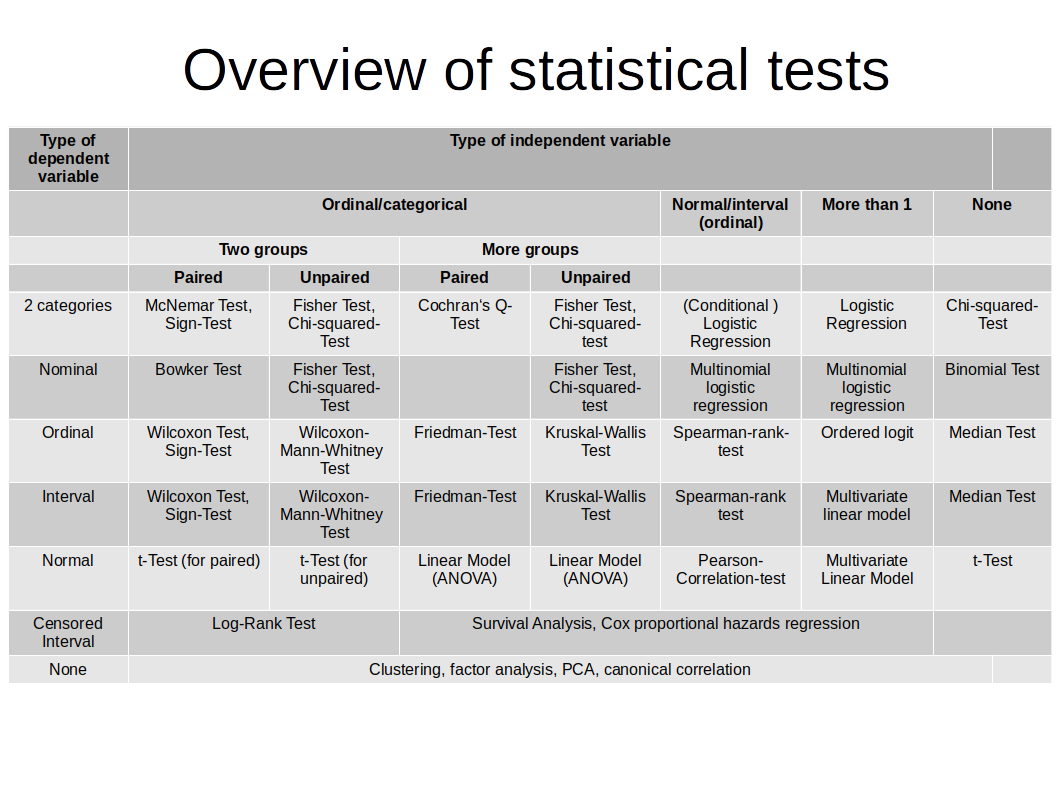
One of the reasons I teach this course is because I think it is really important for students to really understand their data and how to properly analyze it to address their hypotheses. Too often, the way statistics is taught (including how I was first introduced to it as an undergrad) is very rigid, with strict rules to follow, assumptions to be met, and prescribed ways of doing things. Many of us have come across guidelines like these charts for how to pick the right statistical test for your data.

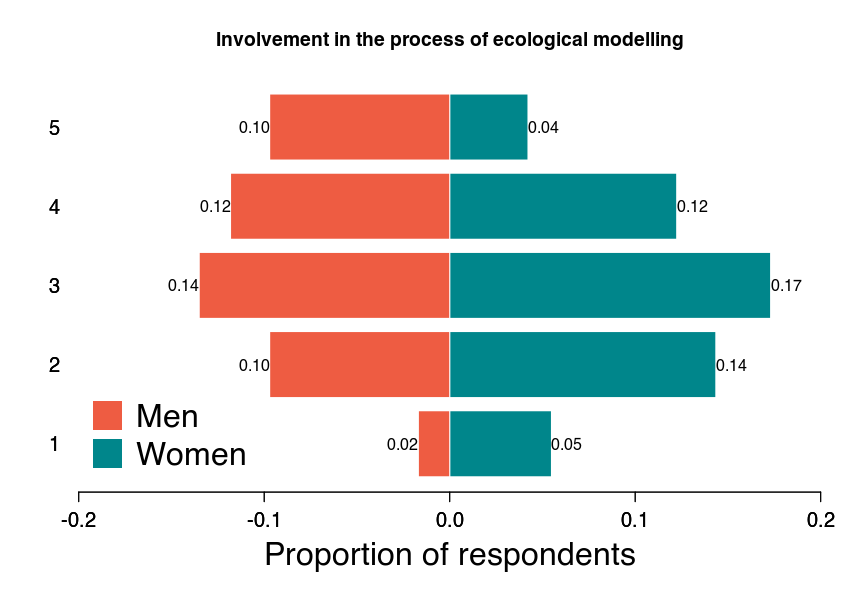
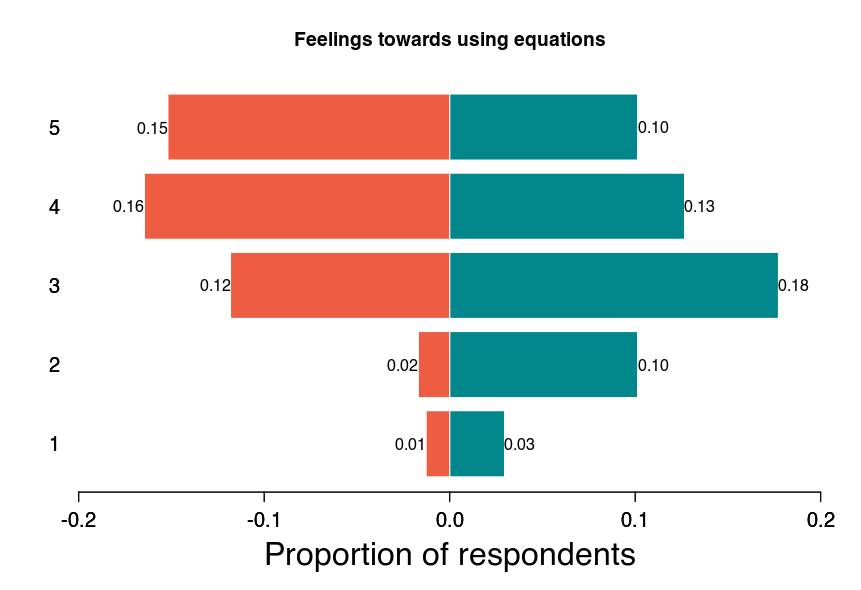
I also think that this approach to learning statistics instills a wariness about doing analyses ‘wrong’, which can turn many students away from statistics and modeling. I have absolutely no data to back this up, but I suspect the rigid way in which statistics is taught is one barrier to more students from historically underrepresented groups in STEM pursuing quantitative ecology. For example, gender stereotypes can cause girls to internalize that they are ‘bad at math’ at an early age, which combined with a fear of not getting the ‘rules’ of statistics right, could be one reason why only 4% of early career women in ecology indicate being very involved in ecological modeling compared to 10% of men. Note that the survey these data are based on only included binary categories for gender (one of the many ways in which data, and statistics, we encounter do not always reflect reality!).
It is also really important for students to develop quantitative skills for their future employment prospects. For graduate students aiming for academic careers, quantitative skills can help them secure permanent positions. 40% of faculty job listings in ecology and related fields require some level of quantitative skills, and 21% require “strong” quantitative skills. Many industry and government research positions also require quantitative skills, including data analysis, visualization, and modeling.
Perhaps most importantly, learning how to code and build models opens up a whole new world of possibilities for asking interesting questions. More often than not, we address questions using the tools we have at our disposal (i.e. if you’ve got a hammer, everything looks like a nail). The type of statistical tests that students often learn are inadequate to deal with many of the questions and hypotheses in ecology and related fields. Instead of being constrained by what statistical tests will be possible with the data or cramming the data into a test that does not really fit, students can learn to build models that truly address their research questions, opening up the possibility for more novel hypotheses.